


A touch of class, an eloquent and calm voice, plenty of style, and a spark of playfulness.
That’s our October Mujer P’Cante: Vasiliki Koui Prestidge.
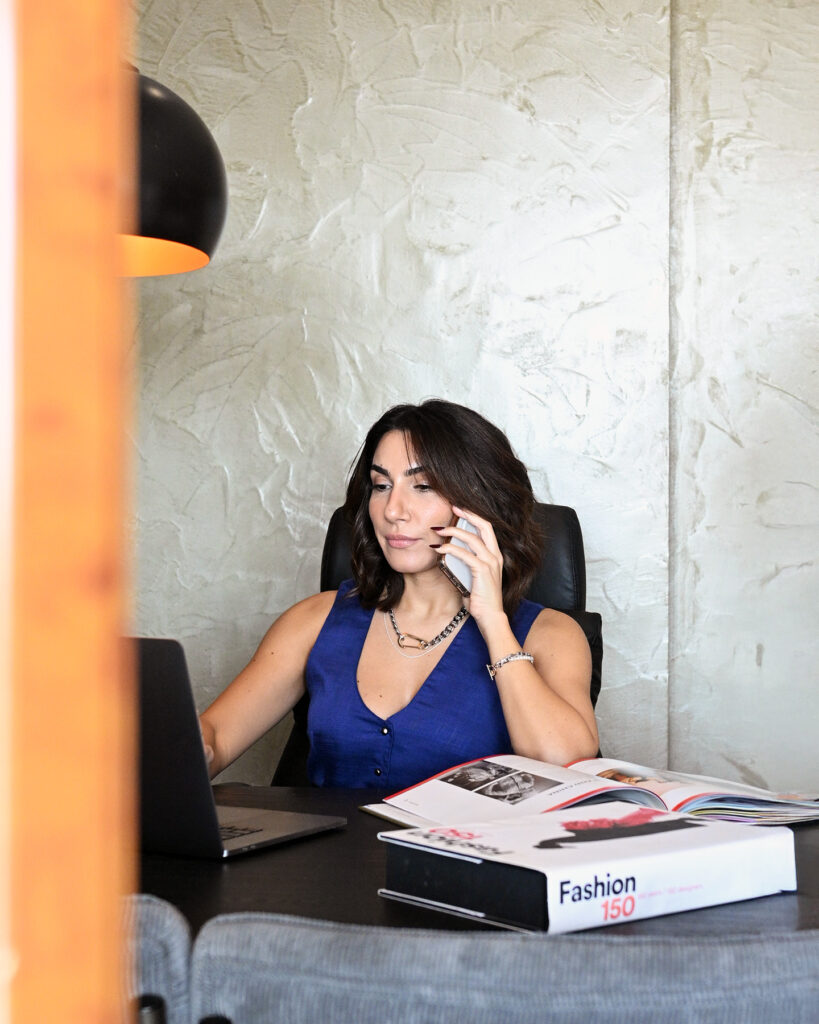
A fashion expert, professional translator, and founder of her own company, Vasiliki has managed to bridge two
worlds that at first seem far apart: the precision of language and the expression of style. Today, in a new chapter
of her career, she combines her linguistic expertise with her passion for fashion as a journalist and reporter,
bringing a sharp and contemporary eye to the feminine universe.
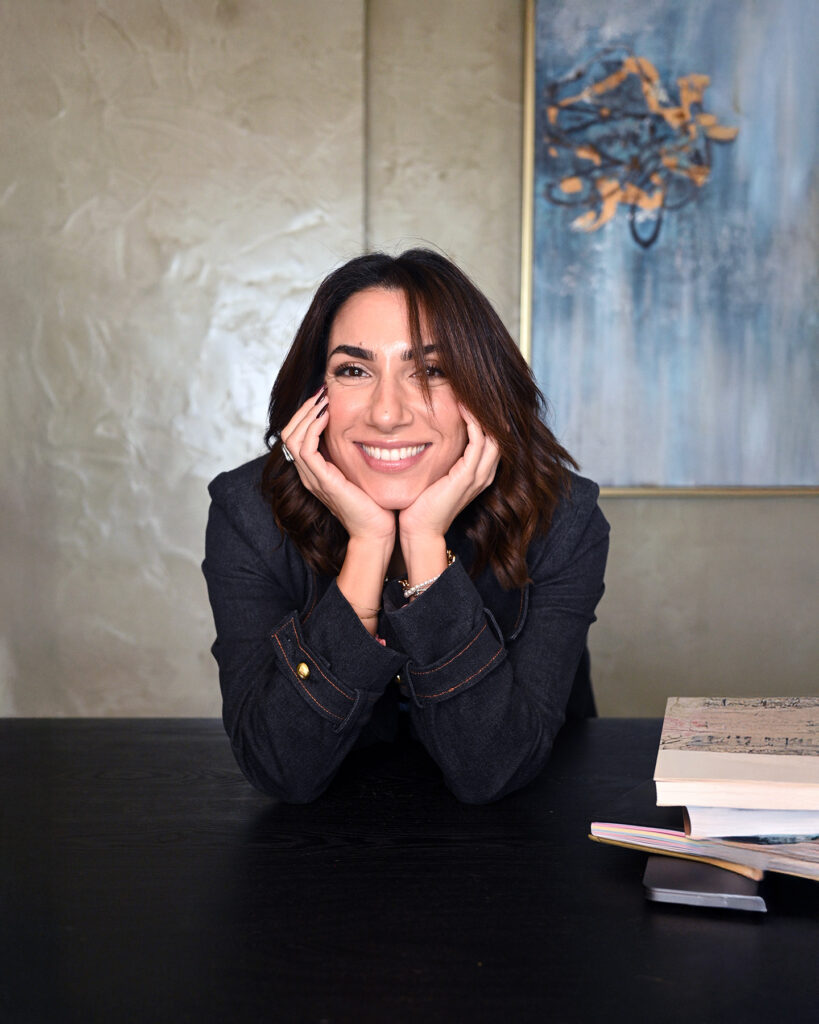
In a world where women constantly change roles, paths, and even coordinates, Vasiliki reminds us that
evolution can also be done in heels, with a smile, and a story worth telling. And speaking of stories, let’s get to know her a little better through her own words:
You’ve lived and worked in different countries and stages of your life. What has been the most challenging part of those transitions, and what drives you to make bold decisions during times of change?
I’ve never been afraid of change. Even though I tend to make very calculated decisions, I believe I’m more
afraid of being stuck in the same place than of hopping on an airplane or shifting career paths. Of course,
uprooting your life can be challenging, and living in a new city where nobody knows you can feel isolating —
but it can also be a blessing.
I’m actually an introvert by nature, but I’ve learned to form deep and meaningful connections and build
networks surprisingly fast — out of necessity, at first. So, adapting to new environments was never an issue. I
built my name and a translation company in London from scratch, which was a steep learning curve. You can
be the best at your job, but if nobody knows you exist, it’s pointless. So I attended every single event I could
and networked like mad. Eventually, you learn to choose what’s worthy of your time and energy, but in the
beginning, you have to dive in deep.
I was young, and I’ll never forget the occasional ageism in the workplace. Some high-profile individuals tended
to see a beautiful, young woman as just that. I was often challenged directly — asked whether I could do my job
or if I had even finished university. It’s still difficult for some people to accept that a woman can be young,
beautiful, educated, and have achieved something in her life. It doesn’t affect me anymore. With age and
experience comes the art of not caring what others think or say about you.
Among all your achievements — as a translator, entrepreneur, and now journalist — is there one
article or project that makes you especially proud?
So many! One of my very first jobs was to interpret during surgery in an operating theatre. I hadn’t even been
told that was the task. A nurse approached me and asked me to scrub in. I was 21 years old, and I swallowed
any self-doubt I had, because someone was already unconscious on an operating table, and my job was to help
two medical professionals communicate — to save a life. I later went home that evening, ordered pizza, and stared at the ceiling for hours.
A couple of years ago, I received a call to interpret for the Champions League. I learned everything I could
about football and the teams I’d be working with. It was such a proud moment — and I loved every second. It
was high-stakes work: I sat next to footballers and coaches from Olympiacos, West Ham, Chelsea, and more,
during live press conferences on TV. It went so well that someone told me I should be the football coach, not
the interpreter!
Most recently, as a fashion journalist, I stumbled across several publications discussing Armani’s legacy, and I
began wondering why the sudden hype — perhaps he was nearing the end of his life. I dug up information
about his succession plan through Reuters and Italian notaries and published an article on September 3 about
who might inherit his empire. The following day, he passed away — and I was shocked.
The news cycle moves incredibly fast, and I come across a hundred things I could write about every day — if
only there were enough hours. People think it’s hard to find something to say every day, but nothing could be
further from the truth. Fashion is a vast industry, and there’s always a story worth telling.
In your experience, what role does personal style play in professional life? Do you believe the way we
dress can influence how we express ourselves or how we feel?
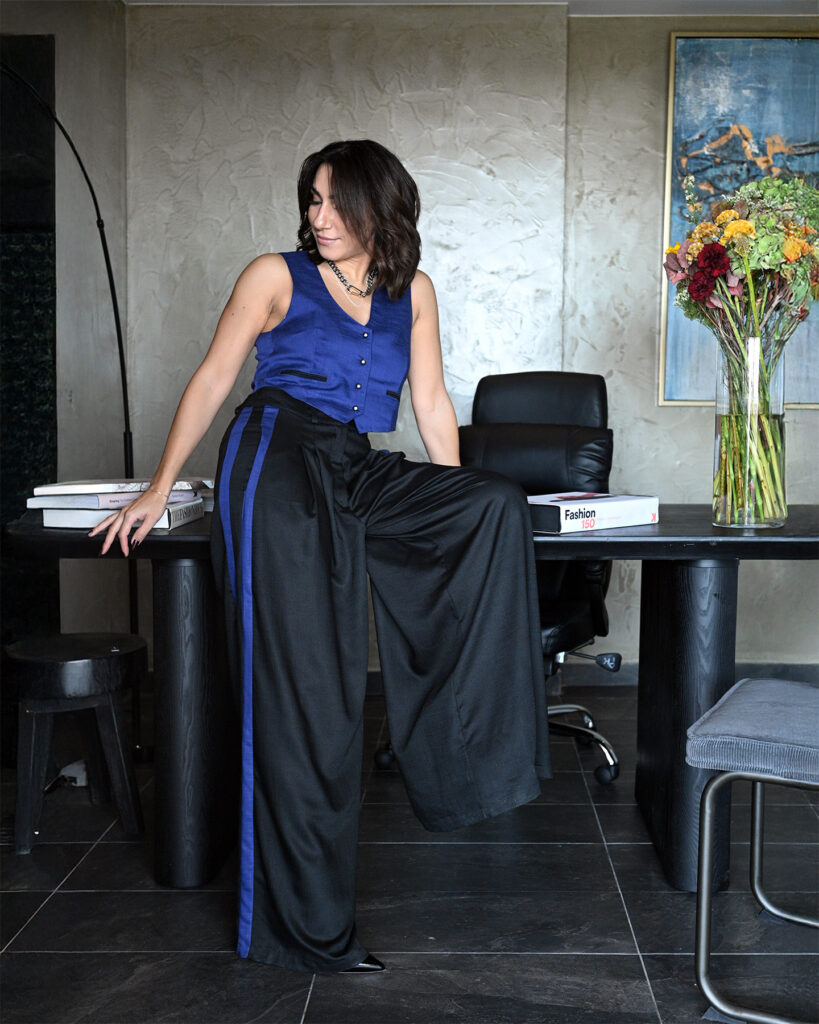
I believe everyone should dress for the job they want, not for the one they have. Style and fashion are a
language — and we choose the message we want to communicate every day. For me, great style means being appropriate for the time, place, person you’re meeting, and the purpose you want to achieve. I also believe in taking care of yourself physically, mentally, and emotionally. Looking good makes me feel good — and that, in turn, fills me with confidence and productivity.
It also affects how others see us. It’s pure human psychology, and it has been proven by countless social
experiments. Whether right or wrong, it remains a fact: those who don’t know you will form opinions based on
their first impression — and before you even speak, your appearance will speak for you.
Many women try to find their own style but sometimes get lost in trends or insecurities.
What advice would you give to a woman who wants to discover her authentic self through fashion?
It’s of paramount importance to know oneself. We also all need to understand our bodies — and even the
rhythms of our cycles. Each of us is different, so we can’t embrace trends in the same way. For me, trends
should be treated with caution. They can be fun, but they must be curated into a wardrobe so that your authentic
self still shines through.
As for insecurities, women can learn a lot from men. Men often wake up in the morning believing they deserve
a promotion — or even the presidency. Women wake up thinking about what we need to fix or change to look better. The headspace we spend covering our insecurities could be redirected toward building businesses or caring for communities.
In essence, true style emerges only when you’ve understood and accepted who you are. When I was younger, I
tried to hide my femininity at work because I wanted to be taken seriously. I dressed too seriously, wanting to
appear older. Now, I no longer feel that way — I know that being a woman is a superpower. We can be serious
and professional yet sexy too, without any of those qualities cancelling each other out. Sometimes, femininity at work can even be a catalyst for improvement and productivity. After all — who wouldn’t want to work in an office full of beauty?
Another thing people often get wrong is that your closet should reflect your life. If you used to be a CEO and
now you’re a mother, you can’t wear YSL suits to play with your baby — and vice versa. Your wardrobe must
serve your daily needs. And since women go through so many life changes, sometimes our closets stop aligning
with who we are. That’s when the fun begins: shopping!
You’re one of those women who share everything — ideas, contacts, even inspiration — without fear
of “competition.” Where does that generous energy come from?
I’ve always been treated that way by people in my life, so it’s a no-brainer for me. Having lived mostly in
London, I got used to people not really caring who you are or what you do — everyone is too busy pursuing
their own goals. There’s no time to gossip, criticize, or compete.
It’s also something I wasn’t taught as a child. I grew up in a family of four, the second child but the first
daughter. My role was to take care of others, to embrace, to accommodate, to lead — and to take ownership.
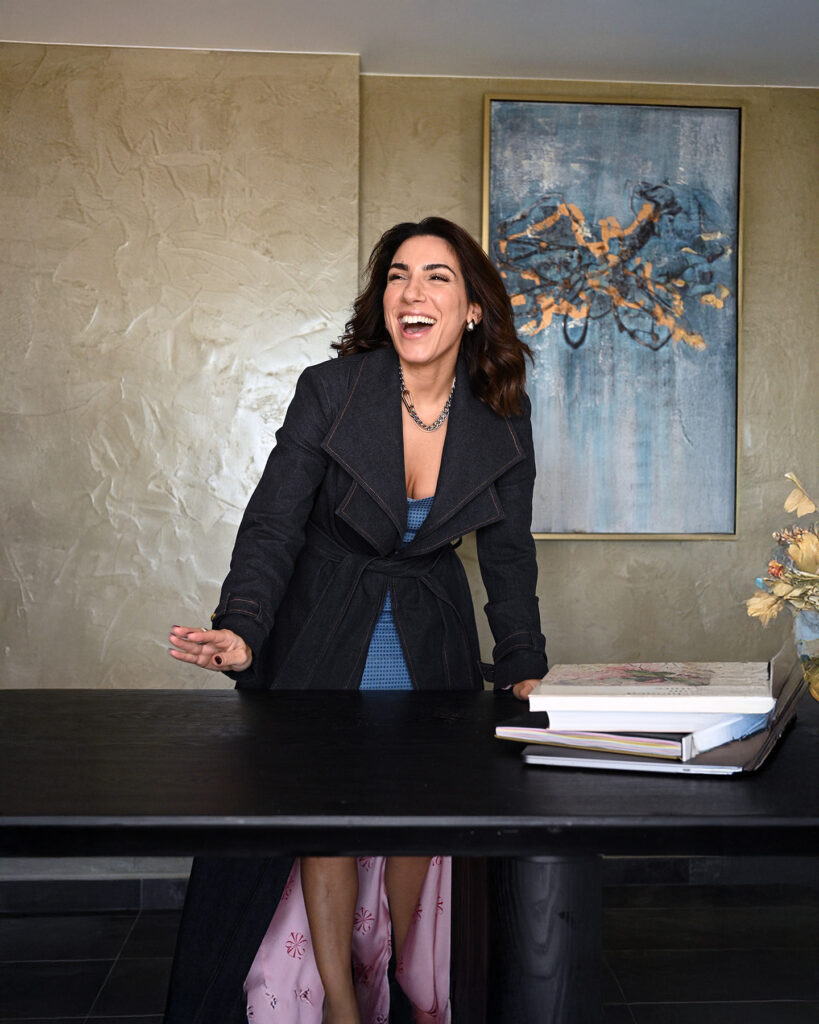
If you could define, in one sentence, the type of woman you admire, how would you describe her?
A clever force of nature, who stands elegantly on her own two feet — aware she can slay any room she walks
into, yet grounded, kind, and full of self-respect.
On a lighter note (because we all have funny stories): What’s been your worst date… and the best lesson you took from it?
Once, I was meeting someone at a bar. He was half an hour late — and in the end, he cancelled. That was after
he’d changed the time of our date at the last minute. I was so annoyed, because for me that shows bad character.
He automatically excluded himself from the chance to date me — especially considering he’d chased me so
much and initiated everything.
Honestly, I should have sent him an invoice for the time and makeup I wasted.
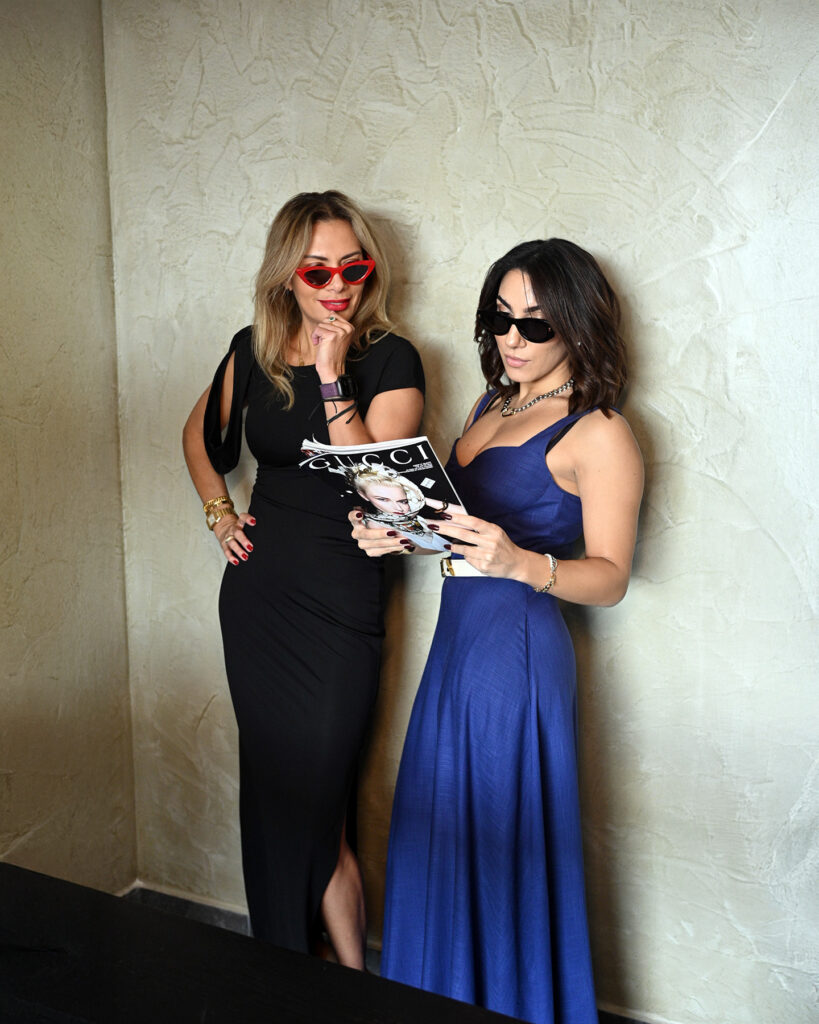
Speaking of female bonds, what value do you think solidarity among women holds in today’s world?
It holds tremendous value — we need each other. We’re social beings, and we need someone to confide in.
There’s room for success — and room for everyone.
And finally — forgive me, but having a fashion expert in front of me, I just can’t resist!
You’ve seen our designs, quality, and essence up close — could you describe in a few words what our brand,
P’Cante, inspires in you?
P’Cante is truly made for the modern woman. I love the quality of the fabrics, the fit, and the simplicity of the
lines. These are clothes you don’t see everywhere — and they tell a story: that you can be strong and beautiful,
unique and yourself, classy and elegant without being stiff or boring. Each piece has something interesting. The designs seem quiet — until they’re not. Just like me!

Vasiliki represents the modern woman: one who reinvents herself, dares boldly, and finds elegance even in
change.
With an open smile and a curious gaze, she reminds us that being a Mujer P’Cante is not just about style, but
about attitude.
Because in the end, true elegance lies in the way we walk together — and keep shining.
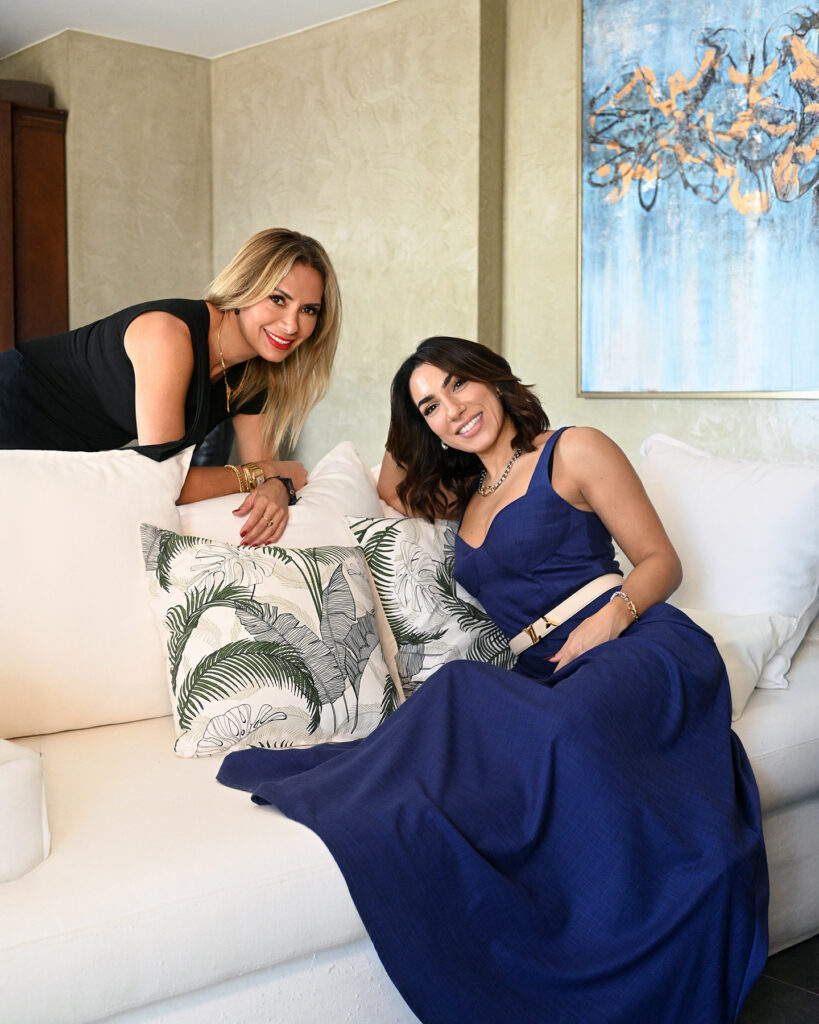
Lorena Gilbert Diakakis – P’Cante Founder
